
A semi-solid-state battery reduces freely flowing liquid electrolyte by using a gel, polymer or mixed solid-liquid structure. It sits between conventional liquid-electrolyte cells and all-solid-state batteries.
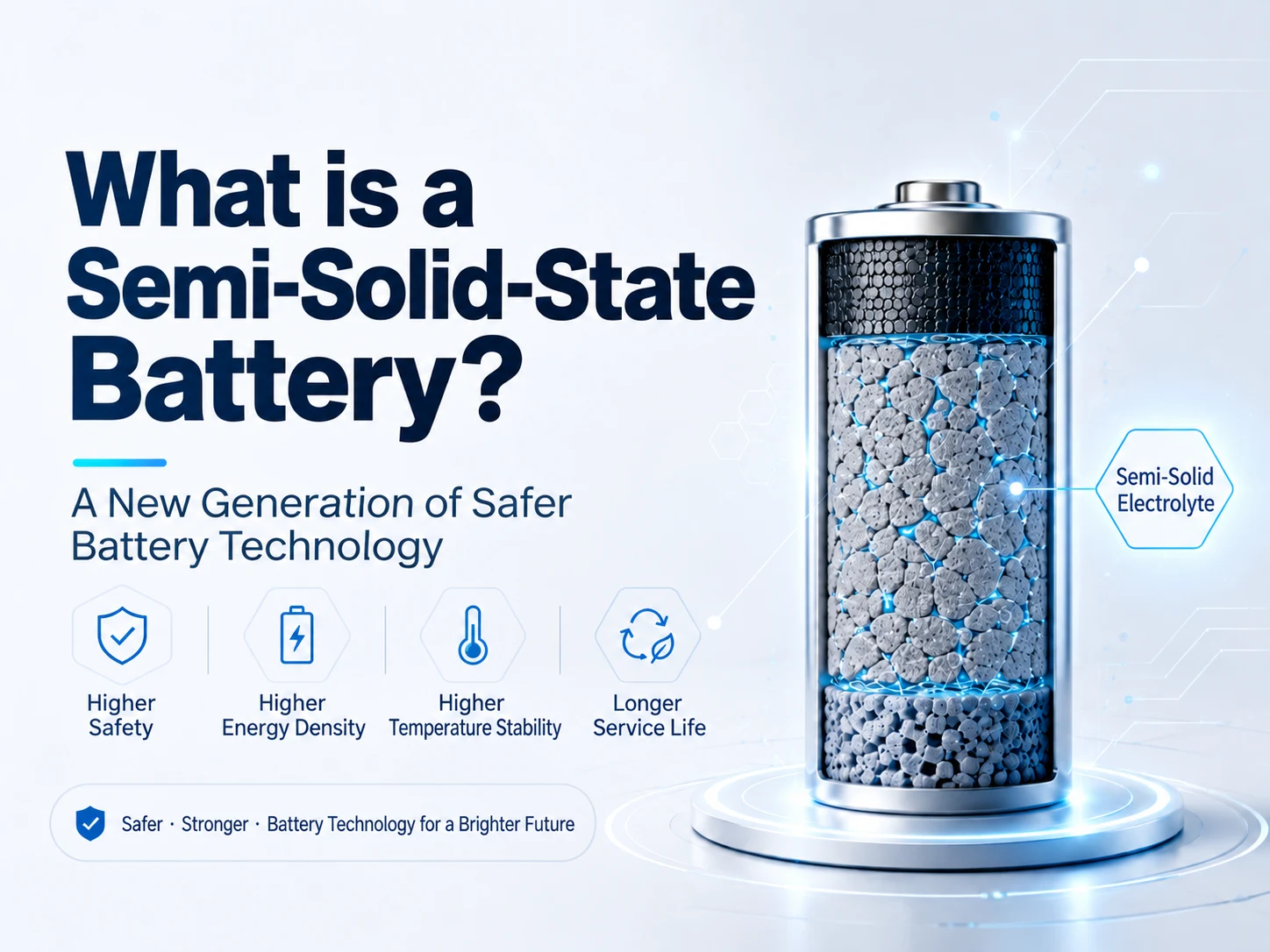
How do the three battery types differ?
Conventional lithium-ion cells mainly use liquid electrolyte. Semi-solid-state cells use gel, polymer or a solid-liquid mixture. All-solid-state cells mainly use solid electrolyte and are still developing for broad commercial use.
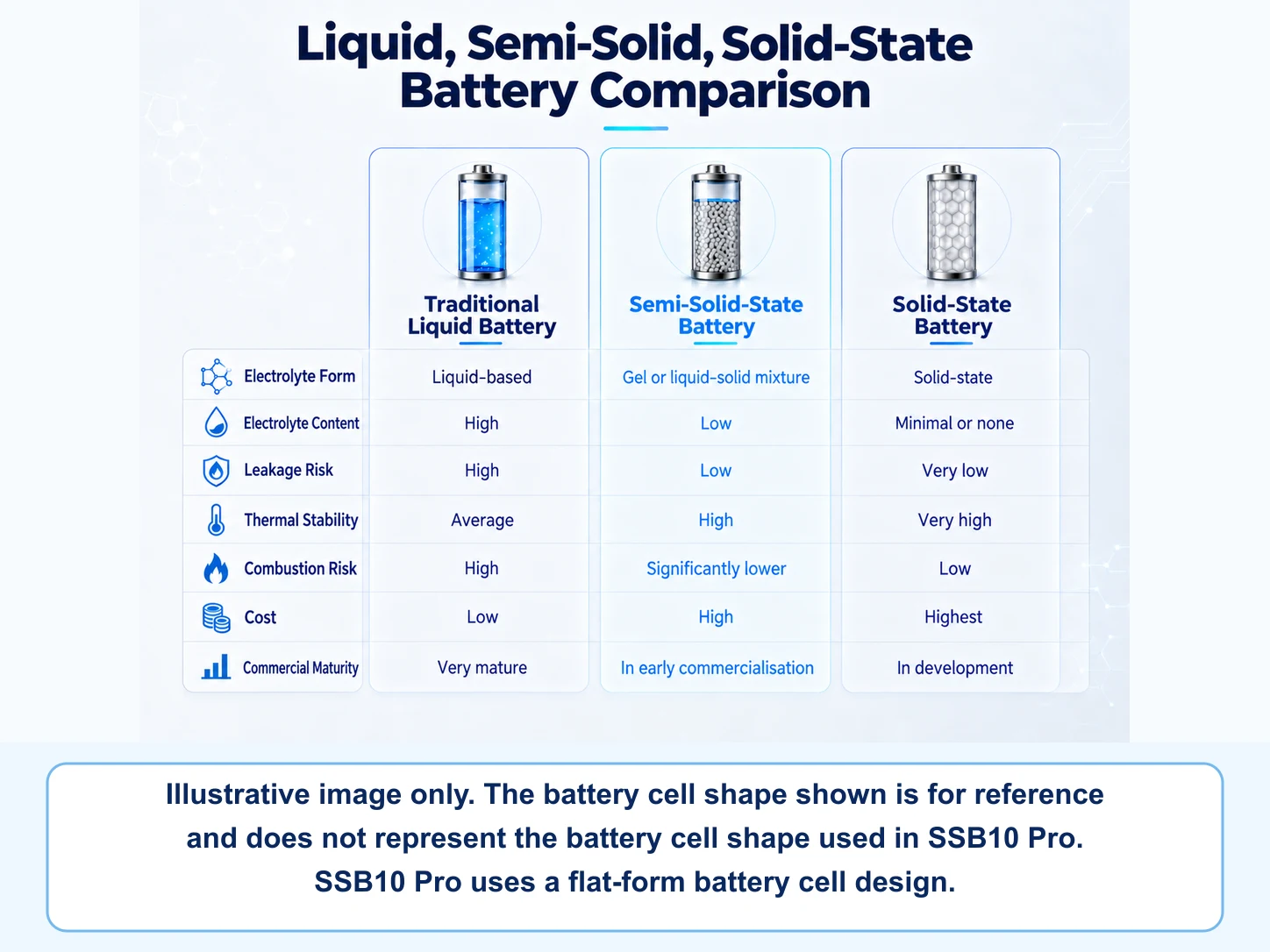
The battery cell illustration above is for reference only and does not represent the physical cell shape used in SSB10 Pro. SSB10 Pro uses a flat-form battery cell design.
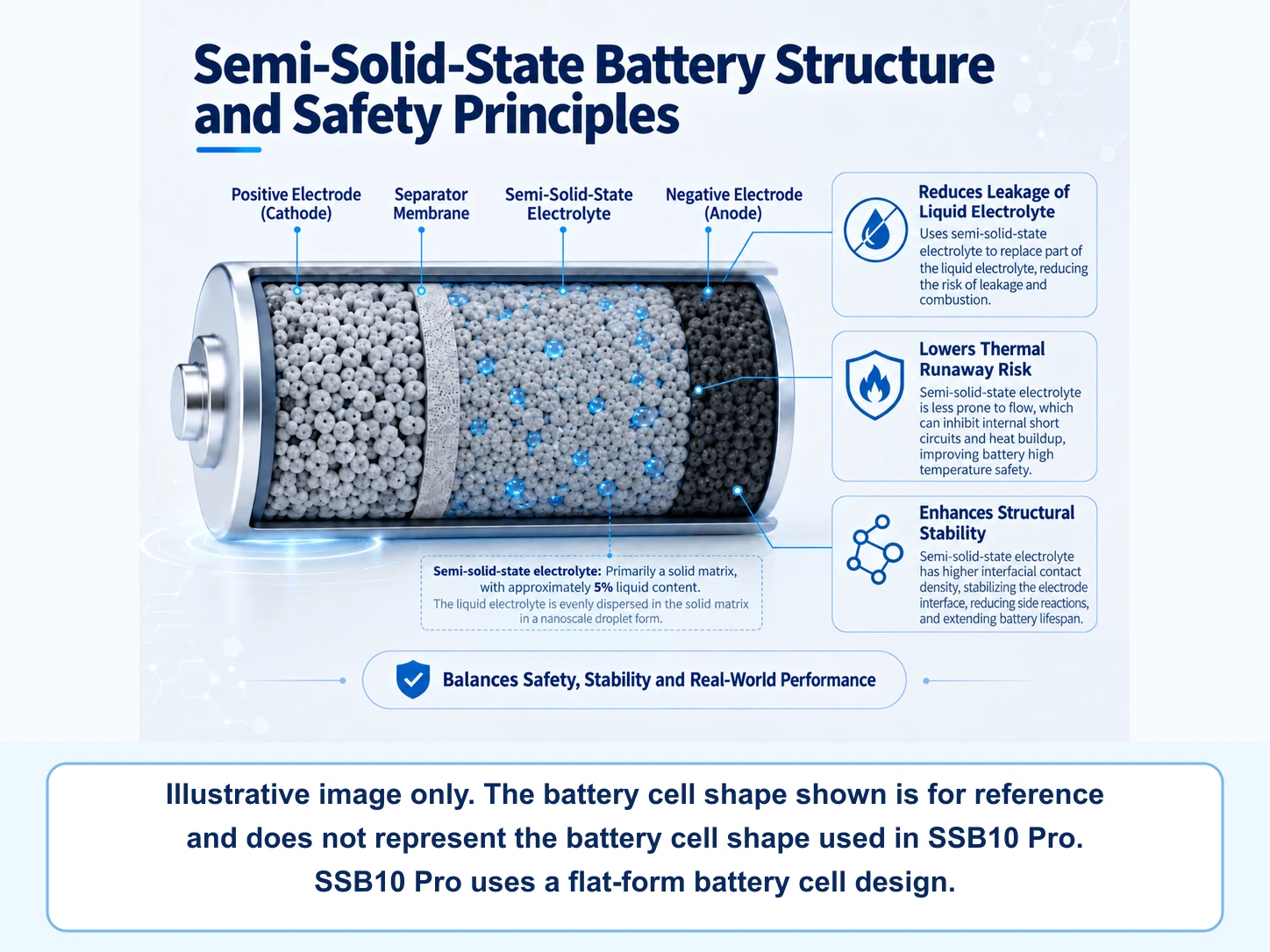
Why can the structure improve stability?
Reducing free-flowing liquid can lower leakage and rapid heat-spread risks. Safety still depends on the complete cell, protection circuitry, charging controls, enclosure and quality management.
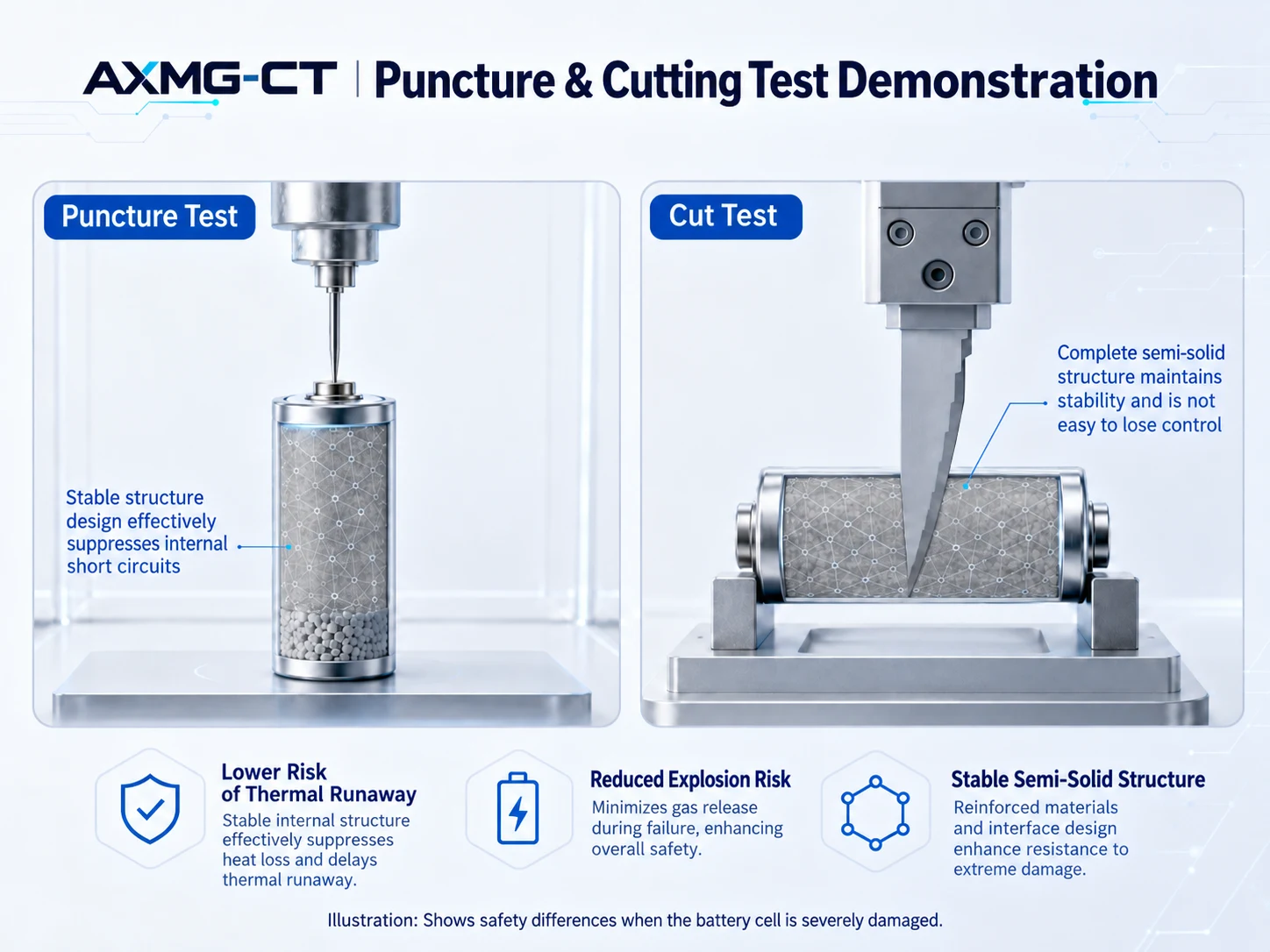
What do puncture and cutting tests show?
These controlled tests observe how a cell behaves after severe physical damage. They do not replace normal handling precautions or the complete product protection system.
SSB10 Pro and semi-solid-state technology
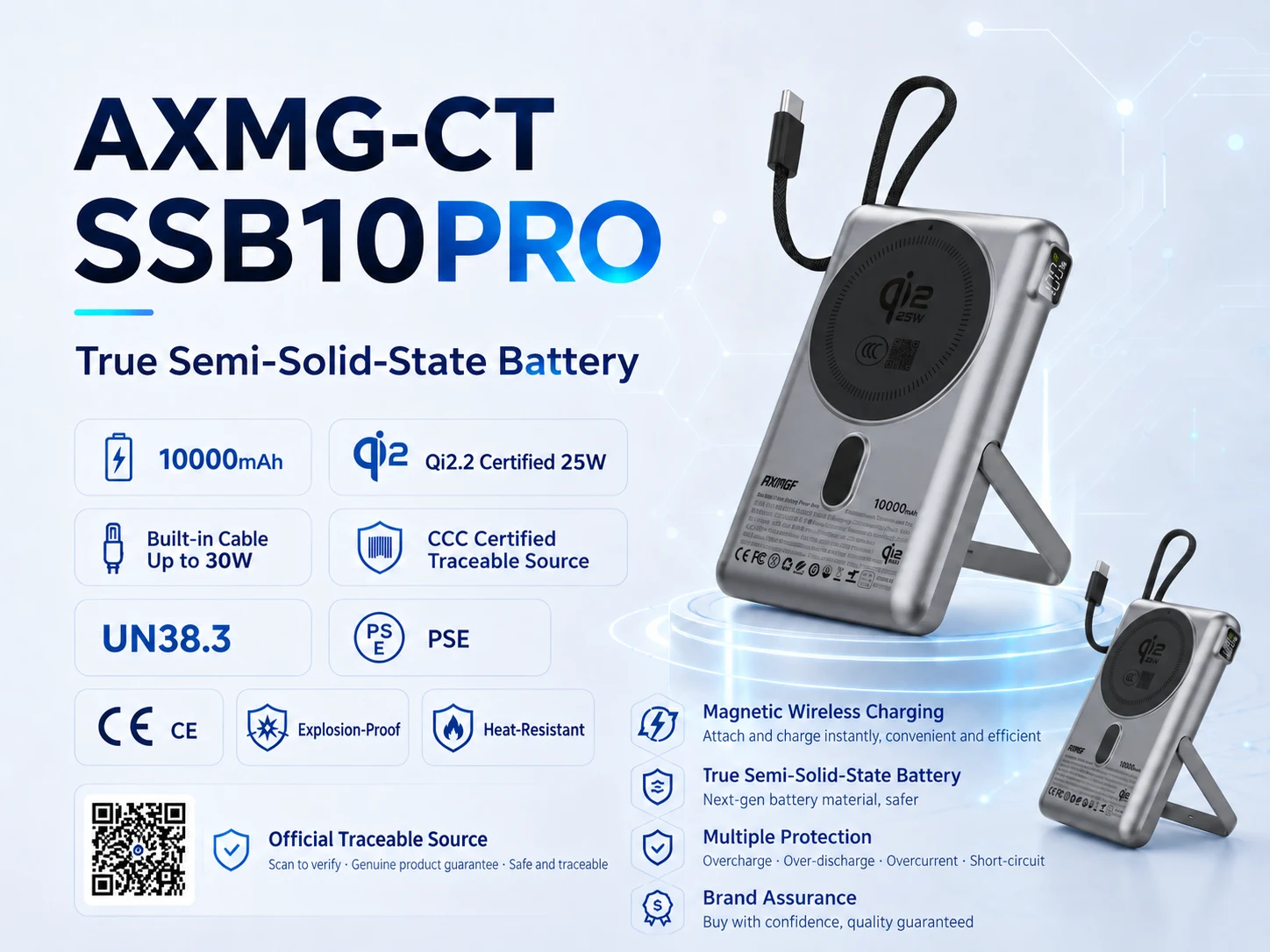
The source identifies SSB10 Pro as using a true semi-solid-state battery, with 10,000mAh capacity, Qi2.2 Certified 25W magnetic wireless charging, a built-in cable up to 30W, and multiple protection features.
Safe use still matters
- Keep the product dry.
- Avoid prolonged exposure to high temperatures.
- Avoid severe impact or crushing.
- Use suitable, undamaged charging cables.
- Do not completely cover the product while charging.
Is a semi-solid-state battery the same as an all-solid-state battery?
No. Semi-solid-state cells use gel, polymer or mixed solid-liquid electrolyte, while all-solid-state cells mainly use solid electrolyte.
Does semi-solid-state technology automatically mean faster charging?
No. Charging speed depends on the charging protocol, power management, thermal design and device support.